

According to the World Health Organization, about 47.5 million people around the world suffer from dementia. With such a high prevalence of this mental condition, there is a dire need that the caregivers follow the latest SOPs while caring for people with Alzheimer’s disease during the pandemic. From regularly sanitizing to maintaining social distance, dealing with all the aspects of Alzheimer’s and COVID-19 together is a challenge.
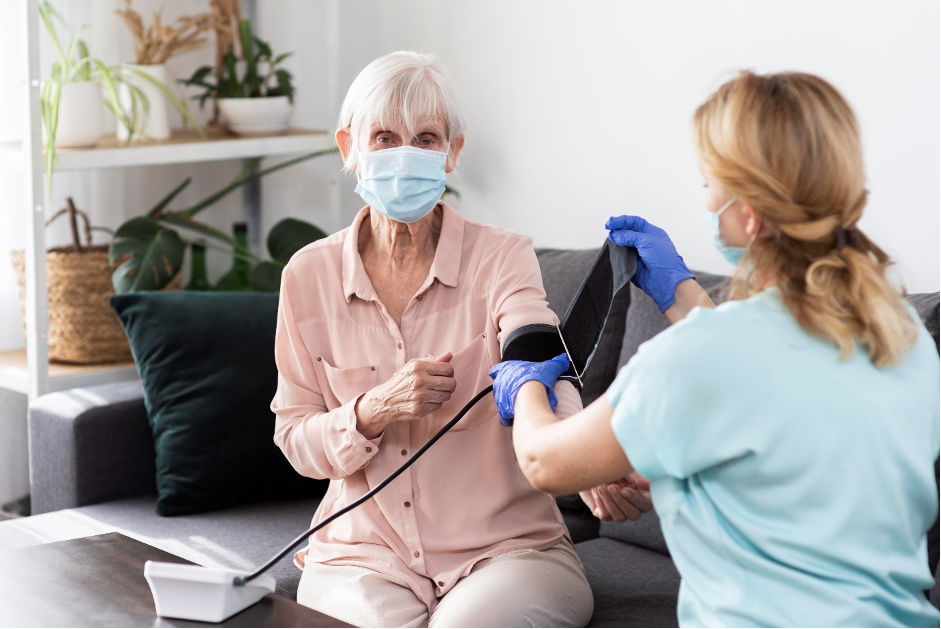
Although there isn’t a single perfect solution for ‘at-home’ management of loved ones with Alzheimer’s in times of a pandemic, but, as a caregiver, you can follow the guidelines laid down by the Center for Disease Control (CDC) to ensure the best possible support.
If you are caring for a loved one with Alzheimer’s disease and looking for guidance during the current pandemic, this is for you!
[H2] What Is the Difference Between Dementia and Alzheimer’s Disease?
While most people use the terms interchangeably, there is a difference between Dementia and Alzheimer’s disease. Dementia is a syndrome that involves a group of symptoms related to a deterioration of memory, intellect, or other cognitive skills. Alzheimer’s disease is a degenerative brain disorder that occurs due to complex changes in the neural tissue followed by brain cell damage.
Dementia is a broader term used to refer to various changes in the human brain. When more than one type of change occurs simultaneously in the brain, the resulting condition is called mixed dementia. The most common cause of dementia is Alzheimer’s disease, accounting for 60-80% of the cases.
Damage caused to the brain cells in dementia has a significant impact on thinking, behaving, feeling, and communicating. One most common difference between Alzheimer’s and dementia involves remembering new information. Alzheimer’s disease affects the brain cells that are involved in the learning process of new things, whereas dementia is commonly associated with the forgetfulness of old information.
Although the most common risk factor of Alzheimer’s is advancing age, it is not customary to have the disease with old age. While many people develop Alzheimer’s at 65 or above; however, about 200,000 people in America develop this condition before the age of 65, and it is typically referred to as younger-onset Alzheimer’s disease.
[H2] What Are the Signs of Alzheimer’s Disease and Dementia?
The early signs of Alzheimer’s disease include:
- Memory loss that affects day to day activities
- Difficulty in solving simple problems
- Challenges in completing familiar tasks
- Confusion about places or time
- Poor perception of the special relationships
- Unusual problems in speaking or writing various words
- Recurrent forgetfulness and misplacement of things
With the advancement of Alzheimer’s disease, symptoms get worse and may include disorientation, severe confusion, and serious behavioral changes. The patient may even start to experience extreme difficulty in speaking, walking, or swallowing.
[H2] How to Take Care of a Loved One with Alzheimer’s At Home During the Pandemic?
The following points can help you care for your loved one with Alzheimer’s disease in an optimal manner during the current pandemic.
[H3] 1. Explain the Pandemic to Your Loved One
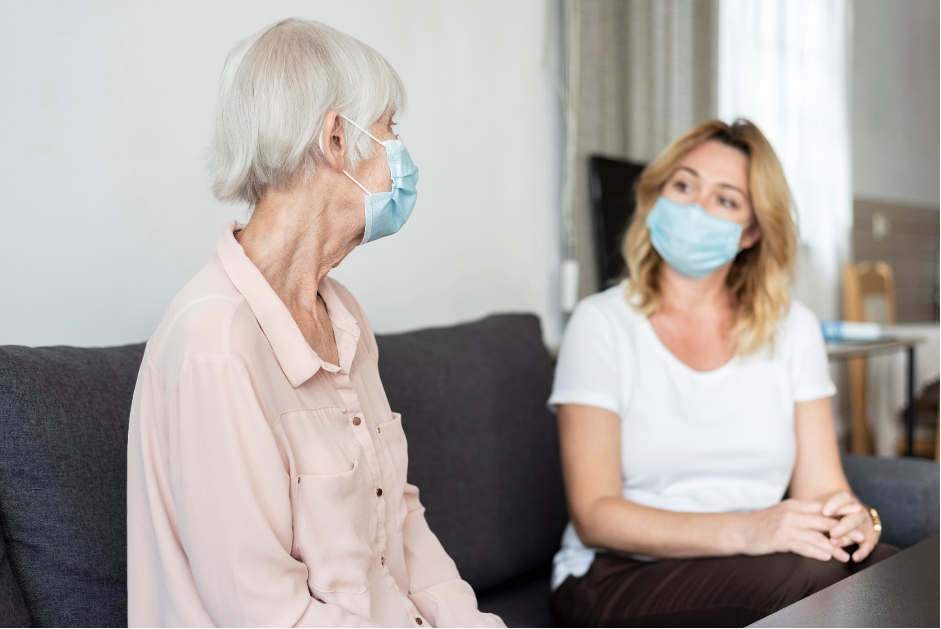
Explain the current situation about COVID-19 to your loved one. Try to break-down to them how it has affected the world and how rapidly it can spread. However, experts opine that you should only explain what they can easily understand and try not to go overboard.
Remember to keep them calm and avoid scaring them or instilling a sense of fear that may cause stress. Just explain why it is necessary to follow critical SOPs such as frequently washing hands, wearing face masks, etc.
[H3] 2. Pay Attention to Hygiene
It is essential to ensure that both the caregiver and the patient maintain an adequate level of hygiene. As the individual with Alzheimer’s is prone to frequent forgetfulness, try setting up constant reminders for them to wash/sanitize their hands and avoid touching eyes. Some measures that help in this regard are:
- Making a schedule chart to wash hands.
- Setting up an alarm that rings, for example, after every hour or two.
- Put up signboards in the bathroom and kitchen to wash hands with soap for at least 20 seconds
- Notifying them whenever you wash your hands or accompany them when they are required to do the same.
[H3] 3. Teach Them How To Communicate Via Video Call
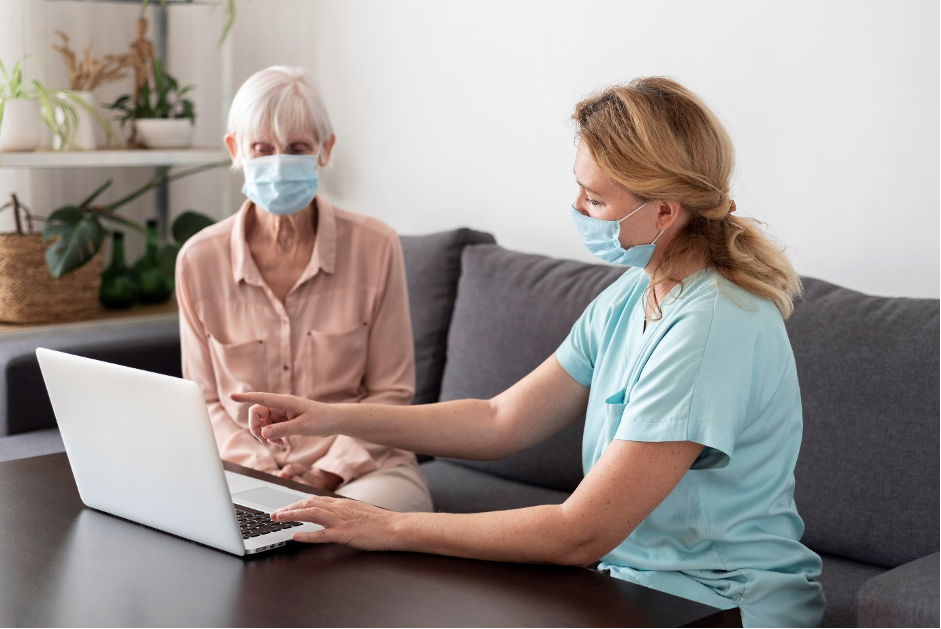
Your loved ones may not stay at home all the time and might want to go out to visit their friends and relatives. They should be frequently reminded about the importance of practicing social distance during the current pandemic. A smart move is to get them to use a laptop or tablet, which can be used for video calls or conference calls with their loved ones.
[H3] 4. Plan For Future, Keep A Backup
With adult day-care centers being closed due to COVID-19 restrictions in place, you should preemptively anticipate less support available for your loved one who has Alzheimer’s disease. Thus, it is critical to plan in advance and keep in touch with caregiving facilities like Moutas home care as a backup. This will ensure that you are well-equipped in case external help is needed.
[H3] 5. Don’t Forget to Take Care Of Yourself
While caring for your loved one with Alzheimer’s disease during these challenging times, it is very important that you don’t neglect yourself. We are still unclear about the future of the COVID-19 and the time it will take to bring things back to normal. So, value your mental and physical health. Take good care of yourself and maintain good mental health. By doing so, you’ll help not only yourself but also your loved ones that rely on your support. Ensure that your service is available to your loved ones for as long as possible, which will only be possible if you are healthy and mentally stable.
[H2] Bottomline
In these difficult times of global pandemic, it is a quite challenge to care for older people with risky comorbidities and mental disorders like Alzheimer’s disease. However, if you follow the aforementioned points in-line with the CDC guidelines, your care routine for adults suffering from dementia in general or Alzheimer’s disease, in particular, can be optimized while reducing the risk of COVID-19 spread. You can also get in touch with Moutas homecare Ottawa Ontario for help and support.
References:
- Moustas homecare. https://moutashomecare.com/
- Anonymous. Coronavirus (COVID-19): Tips for Dementia Caregivers. https://www.alz.org/help-support/caregiving/coronavirus-(covid-19)-tips-for-dementia-care
- Anonymous. Additional COVID-19 Guidance for Caregivers of People Living with Dementia in Community Settings. CDC. Sept, 2020. https://www.cdc.gov/coronavirus/2019-ncov/need-extra-precautions/caregivers-dementia.html
- Cassaty C. Caring for Someone with Alzheimer’s During the COVID-19 Outbreak: 5 Tips. healthline. April, 2020. https://www.healthline.com/health-news/caring-for-people-with-alzheimers-during-covid-outbreak#2.-Plan-for-gaps-in-caregiving
- Anonymous. Dementia vs. Alzheimer’s Disease: What is the Difference? AA. https://www.alz.org/alzheimers-dementia/difference-between-dementia-and-alzheimer-s
- Legg T J. Dementia and Alzheimer’s: What Are the Differences? Sept, 2020. https://www.healthline.com/health/alzheimers-disease/difference-dementia-alzheimers
- Anonymous. 10 Early Signs and Symptoms of Alzheimer’s. AA. https://www.alz.org/alzheimers-dementia/10_signs